
The Apex Predators: A Deep Dive into the World’s Fastest Cars and Their Unprecedented Top Speeds
For decades, the automotive industry has engaged in a relentless pursuit of pushing the bou
ndaries of what’s possible, particularly when it comes to sheer velocity. This isn’t just a matter of bragging rights; it’s a testament to human ingenuity and the relentless drive to innovate. While most drivers may never find an opportune moment – or legal stretch of road – to truly unleash the full potential of these hypercars, the quest for the fastest car in the world continues to captivate enthusiasts and engineers alike. We’ve long since shattered the 250 mph (400 km/h) barrier, and the current frontier is a dizzying dance around the 300 mph (483 km/h) mark, with a new generation of hypercars poised to redefine what “fast” truly means.
The arena for this ultimate speed battle is a hallowed ground reserved for a select few machines. It’s a realm where cutting-edge engineering, meticulous aerodynamic design, and immense power converge. The contenders are not just cars; they are rolling sculptures, meticulously crafted to slice through the air with surgical precision. The pursuit of the fastest production car is an arms race, where brands like Bugatti, Koenigsegg, Hennessey, and SSC North America continually vie for the ultimate accolade.
The Anatomy of Velocity: What Fuels the Drive for Extreme Speed?
Achieving speeds that blur the lines between reality and the fantastical requires more than just a powerful engine. It’s a holistic engineering challenge. Consider the fundamental components that enable a vehicle to achieve over 250 mph (400 km/h):
Powertrain Prowess: At the heart of these speed machines lies an engine that redefines power. We’re talking about multi-turbocharged V8s, V12s, and even the iconic W16 configurations that produce well over 1,000 horsepower. The raw output is staggering, but it’s the way this power is delivered and managed that truly matters. This often involves advanced fuel systems, sophisticated engine management, and robust internal components designed to withstand extreme forces.
Aerodynamic Supremacy: In the realm of hypercars, aerodynamics is not merely an aesthetic consideration; it’s a critical performance enhancer. Every curve, every wing, and every vent is sculpted to minimize drag and maximize downforce. Low-slung, elongated designs with active aero elements are common, working in harmony with the airflow to keep the car planted and stable at exorbitant speeds. The goal is to make the air an ally, not an adversary.
Chassis and Suspension Innovation: The foundation of any fast car is a rigid and lightweight chassis. Advanced materials like carbon fiber monocoques are standard, providing a strong yet incredibly light structure. The suspension systems are equally sophisticated, designed to maintain optimal tire contact with the road, absorb imperfections, and manage weight transfer under extreme acceleration and deceleration.
Braking Brilliance: The ability to stop is as crucial as the ability to go. Hypercars are equipped with immense braking systems, often featuring carbon-ceramic rotors and multi-piston calipers. These are engineered to dissipate enormous amounts of heat generated during hard braking, ensuring consistent performance lap after lap, or during a high-speed record attempt.
Tire Technology: The tires are the single point of contact between the car and the road. For speeds exceeding 250 mph, specialized tires are essential. These are not your everyday tires; they are designed to withstand immense centrifugal forces, heat buildup, and provide incredible grip. The development of these tires is a significant undertaking in itself.
A Chronicle of Speed: Tracing the Evolution of the Fastest Cars
The journey to today’s mind-bending speeds is a rich tapestry of innovation and competition. While names like Bugatti and Koenigsegg dominate the modern era, earlier pioneers laid the groundwork for this ultimate speed chase.
 The mid-2000s marked a pivotal moment with the arrival of the Bugatti Veyron. This automotive behemoth, born from Volkswagen’s ambitious vision, was the first production car to officially break the 250 mph (400 km/h) barrier. Its colossal 8.0-liter W16 quad-turbocharged engine was a masterpiece of engineering, producing over 1,000 horsepower. The Veyron didn’t just set a record; it redefined the supercar landscape and put the term “hypercar” firmly into the automotive lexicon.
Before the Veyron, the late 1990s and early 2000s witnessed a fierce battle for the title of the fastest car. The McLaren F1, a legendary creation by Gordon Murray, held the crown for a significant period. Its lightweight construction, naturally aspirated BMW V12 engine, and revolutionary design pushed the boundaries of performance. It was a car that prioritized driver connection and purity of experience, achieving a staggering 240 mph (386 km/h) in 1998, a feat that seemed almost unimaginable at the time.
The 1990s also saw other titans emerge. The Bugatti EB110 SS was a marvel of its time, showcasing advanced materials and a quad-turbocharged V12. It demonstrated that Bugatti’s legacy of speed was far from over. Italian coachbuilder Saleen also made its mark with the Saleen S7 Twin Turbo, an American muscle car that embraced exotic materials and twin-turbocharging to deliver blistering performance, pushing towards the 250 mph (400 km/h) mark.
Looking further back, the legends of the automotive world paved the way. The Mercedes-Benz 300 SL “Gullwing” in the 1950s was one of the first production cars to exceed 155 mph (250 km/h), a remarkable achievement for its era. Later, the Ferrari 288 GTO in the 1980s pushed the envelope further, becoming one of the first to breach 186 mph (300 km/h). These machines, while not reaching today’s speeds, were instrumental in forging the path for the hypercars we see today.
The Current Pantheon of Speed: Unveiling the Titans of Today
The landscape of the fastest cars in the world is a dynamic one, constantly evolving with new contenders emerging and challenging existing records. Here’s a look at some of the titans that currently grace the upper echelons of automotive velocity:
Yangwang U9 Xtreme: The Electric Revolution Continues
Emerging from China’s burgeoning automotive scene, the Yangwang U9 Xtreme has shattered expectations and claimed the title of the fastest production car in 2025. This limited-edition hypercar, derived from BYD’s luxury marque Yangwang, represents a paradigm shift. Powered by an advanced electric drivetrain boasting over 3,000 horsepower distributed across four electric motors, the U9 Xtreme achieves an astonishing 496.22 km/h (308.3 mph). Its incredible power-to-weight ratio and cutting-edge battery technology have propelled it past established contenders, demonstrating the formidable potential of electric propulsion in the hypercar segment. This achievement underscores the rapid advancements in EV technology and its ability to compete at the very highest levels of performance.
Bugatti Chiron Super Sport 300+: The 300 MPH Barrier Breaker
While not officially recognized by Guinness World Records for its top speed run, the Bugatti Chiron Super Sport 300+ achieved a monumental milestone in 2019. On the hallowed grounds of Volkswagen’s Ehra-Lessien test track, this enhanced version of the Chiron, boasting 1,600 horsepower and aerodynamic refinements, breached the 300 mph (483 km/h) barrier, reaching an incredible 490.48 km/h (304.77 mph). This landmark achievement, even if unofficial in the record books, solidified Bugatti’s position as a pioneer in extreme automotive performance and set a new benchmark for production car speed. The limited-production nature of this Chiron variant, with a restricted top speed for customer cars, only adds to its legendary status.
SSC Tuatara: A Contender with a Complicated Reign
The SSC Tuatara has been a name synonymous with the pursuit of the fastest production car record in recent years. After a controversial initial record attempt, SSC North America, formerly Shelby Super Cars, successfully validated its speed in 2021. Achieving an official average speed of 455.28 km/h (282.9 mph) over two runs, with a peak speed of 460 km/h (286 mph), the Tuatara, powered by a potent 1,750 horsepower V8 when running on E85 fuel, secured its place in the record books. However, the pursuit of ultimate speed often involves intricate details and stringent verification, making its reign a testament to perseverance in the face of challenges.
Koenigsegg Agera RS: The Swedish Speed King
Koenigsegg, the Swedish marque founded by Christian von Koenigsegg, has consistently been a formidable rival to Bugatti in the hypercar arena. In 2017, the Koenigsegg Agera RS ascended to the pinnacle of automotive speed, claiming the Guinness World Record with an average speed of 447.2 km/h (277.87 mph). This masterpiece of engineering, powered by a 5.0-liter twin-turbo V8 producing 1,160 horsepower, not only set the speed record but also demonstrated incredible agility with a groundbreaking 0-400-0 km/h time. The Agera RS remains a benchmark for both speed and engineering prowess.
Aspark Owl SP600: The Electric Challenger
The electric vehicle revolution has found a powerful champion in the Aspark Owl SP600. This Japanese-Italian collaboration achieved a remarkable 438.7 km/h (272.6 mph) on the Papenburg test track in June 2024, briefly holding the title of the world’s fastest electric car. While this record-setting example was a pre-production unit with specific aerodynamic advantages, it showcased the immense potential of electric powertrains to compete at the highest echelons of speed, setting the stage for future production models.
Hennessey Venom F5: Aiming for the 300 MPH Club
The mid-2000s marked a pivotal moment with the arrival of the Bugatti Veyron. This automotive behemoth, born from Volkswagen’s ambitious vision, was the first production car to officially break the 250 mph (400 km/h) barrier. Its colossal 8.0-liter W16 quad-turbocharged engine was a masterpiece of engineering, producing over 1,000 horsepower. The Veyron didn’t just set a record; it redefined the supercar landscape and put the term “hypercar” firmly into the automotive lexicon.
Before the Veyron, the late 1990s and early 2000s witnessed a fierce battle for the title of the fastest car. The McLaren F1, a legendary creation by Gordon Murray, held the crown for a significant period. Its lightweight construction, naturally aspirated BMW V12 engine, and revolutionary design pushed the boundaries of performance. It was a car that prioritized driver connection and purity of experience, achieving a staggering 240 mph (386 km/h) in 1998, a feat that seemed almost unimaginable at the time.
The 1990s also saw other titans emerge. The Bugatti EB110 SS was a marvel of its time, showcasing advanced materials and a quad-turbocharged V12. It demonstrated that Bugatti’s legacy of speed was far from over. Italian coachbuilder Saleen also made its mark with the Saleen S7 Twin Turbo, an American muscle car that embraced exotic materials and twin-turbocharging to deliver blistering performance, pushing towards the 250 mph (400 km/h) mark.
Looking further back, the legends of the automotive world paved the way. The Mercedes-Benz 300 SL “Gullwing” in the 1950s was one of the first production cars to exceed 155 mph (250 km/h), a remarkable achievement for its era. Later, the Ferrari 288 GTO in the 1980s pushed the envelope further, becoming one of the first to breach 186 mph (300 km/h). These machines, while not reaching today’s speeds, were instrumental in forging the path for the hypercars we see today.
The Current Pantheon of Speed: Unveiling the Titans of Today
The landscape of the fastest cars in the world is a dynamic one, constantly evolving with new contenders emerging and challenging existing records. Here’s a look at some of the titans that currently grace the upper echelons of automotive velocity:
Yangwang U9 Xtreme: The Electric Revolution Continues
Emerging from China’s burgeoning automotive scene, the Yangwang U9 Xtreme has shattered expectations and claimed the title of the fastest production car in 2025. This limited-edition hypercar, derived from BYD’s luxury marque Yangwang, represents a paradigm shift. Powered by an advanced electric drivetrain boasting over 3,000 horsepower distributed across four electric motors, the U9 Xtreme achieves an astonishing 496.22 km/h (308.3 mph). Its incredible power-to-weight ratio and cutting-edge battery technology have propelled it past established contenders, demonstrating the formidable potential of electric propulsion in the hypercar segment. This achievement underscores the rapid advancements in EV technology and its ability to compete at the very highest levels of performance.
Bugatti Chiron Super Sport 300+: The 300 MPH Barrier Breaker
While not officially recognized by Guinness World Records for its top speed run, the Bugatti Chiron Super Sport 300+ achieved a monumental milestone in 2019. On the hallowed grounds of Volkswagen’s Ehra-Lessien test track, this enhanced version of the Chiron, boasting 1,600 horsepower and aerodynamic refinements, breached the 300 mph (483 km/h) barrier, reaching an incredible 490.48 km/h (304.77 mph). This landmark achievement, even if unofficial in the record books, solidified Bugatti’s position as a pioneer in extreme automotive performance and set a new benchmark for production car speed. The limited-production nature of this Chiron variant, with a restricted top speed for customer cars, only adds to its legendary status.
SSC Tuatara: A Contender with a Complicated Reign
The SSC Tuatara has been a name synonymous with the pursuit of the fastest production car record in recent years. After a controversial initial record attempt, SSC North America, formerly Shelby Super Cars, successfully validated its speed in 2021. Achieving an official average speed of 455.28 km/h (282.9 mph) over two runs, with a peak speed of 460 km/h (286 mph), the Tuatara, powered by a potent 1,750 horsepower V8 when running on E85 fuel, secured its place in the record books. However, the pursuit of ultimate speed often involves intricate details and stringent verification, making its reign a testament to perseverance in the face of challenges.
Koenigsegg Agera RS: The Swedish Speed King
Koenigsegg, the Swedish marque founded by Christian von Koenigsegg, has consistently been a formidable rival to Bugatti in the hypercar arena. In 2017, the Koenigsegg Agera RS ascended to the pinnacle of automotive speed, claiming the Guinness World Record with an average speed of 447.2 km/h (277.87 mph). This masterpiece of engineering, powered by a 5.0-liter twin-turbo V8 producing 1,160 horsepower, not only set the speed record but also demonstrated incredible agility with a groundbreaking 0-400-0 km/h time. The Agera RS remains a benchmark for both speed and engineering prowess.
Aspark Owl SP600: The Electric Challenger
The electric vehicle revolution has found a powerful champion in the Aspark Owl SP600. This Japanese-Italian collaboration achieved a remarkable 438.7 km/h (272.6 mph) on the Papenburg test track in June 2024, briefly holding the title of the world’s fastest electric car. While this record-setting example was a pre-production unit with specific aerodynamic advantages, it showcased the immense potential of electric powertrains to compete at the highest echelons of speed, setting the stage for future production models.
Hennessey Venom F5: Aiming for the 300 MPH Club
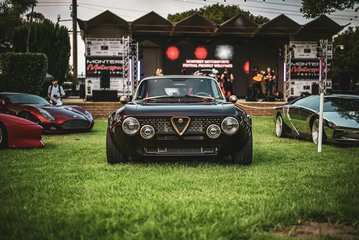 Hennessey Performance Engineering, known for its potent tuning capabilities, has stepped into the hypercar arena with the Venom F5. This beast, powered by a 6.6-liter twin-turbo V8 producing a staggering 1,842 horsepower, has a stated top speed ambition of over 300 mph (483 km/h). While its current proven top speed stands at 435 km/h (270 mph), achieved during testing, the Venom F5 is very much a work in progress, with ongoing development aiming to unlock its full, record-breaking potential. Its aggressive design and immense power output make it a serious contender for future speed records.
Hennessey Venom GT: A Surprise Record Holder
Before the F5, the Hennessey Venom GT stunned the automotive world in 2014. This heavily modified Lotus Exige, powered by a 7.0-liter supercharged V8 producing 1,244 horsepower, achieved a verified speed of 432.5 km/h (267.6 mph) at NASA’s Kennedy Space Center. This remarkable feat earned it a place in the Guinness World Records, temporarily unseating Bugatti and demonstrating the potential of American performance engineering.
Bugatti Veyron Super Sport: The Evolution of an Icon
Bugatti didn’t rest on its laurels with the original Veyron. The Bugatti Veyron Super Sport, released in 2010, represented an evolution of the groundbreaking original. With an enhanced W16 engine producing 1,200 horsepower and aerodynamic improvements, it achieved a verified top speed of 430.98 km/h (267.86 mph), reclaiming the Guinness World Record. While production versions were electronically limited for tire safety, the Super Sport’s raw capability cemented its legendary status.
Rimac Nevera: The Electric Pacesetter
The Rimac Nevera has been a prominent figure in the electric hypercar landscape. For a significant period, it held the title of the fastest production electric vehicle, reaching an impressive 412 km/h (256 mph). With 1,914 horsepower and an incredibly slippery aerodynamic design, the Nevera has also set records in acceleration, including the quarter-mile for a production car. While customer versions are electronically limited, Rimac has demonstrated its unbridled speed potential in controlled environments.
Koenigsegg Jesko Absolut: The Aspiring King
The Koenigsegg Jesko Absolut represents the Swedish manufacturer’s most ambitious attempt yet at achieving ultimate top speed. Designed with an almost obsessive focus on minimizing drag, its theoretical top speed is believed to exceed 300 mph (483 km/h), with some simulations suggesting figures well over 330 mph (531 km/h). While a verified record run has yet to materialize, its performance in other speed-related metrics, such as a Guinness World Record for the 0–400–0 km/h acceleration and deceleration, points towards its immense potential. With a target of reaching the 330 mph mark, the Jesko Absolut is a machine to watch closely in the ongoing speed chase.
Honorable Mentions:
Bugatti Chiron: The standard Bugatti Chiron is no slouch, offering a remarkable top speed of 420 km/h (261 mph), a testament to its evolution from the Veyron.
Koenigsegg Regera: This hybrid marvel combines incredible power with a unique direct-drive system, achieving speeds of 410 km/h (255 mph) and showcasing a different approach to hypercar performance.
Pagani Huayra BC: Known for its exquisite craftsmanship and powerful AMG-sourced V12, the Pagani Huayra BC can reach speeds of 388 km/h (241 mph), with rumors of even higher potential.
Porsche 918 Spyder, McLaren P1, LaFerrari: These three hybrid hypercars, often referred to as “The Holy Trinity,” each offered groundbreaking performance for their time, with top speeds around 350 km/h (217 mph), demonstrating the early integration of electric power with internal combustion.
The Unending Quest: What Lies Ahead?
The quest for the fastest car in the world is far from over. As technology continues to advance at an exponential rate, we can anticipate even more astonishing feats of engineering. The rise of electric vehicles, the refinement of hybrid powertrains, and the relentless pursuit of aerodynamic perfection will undoubtedly lead to new contenders pushing beyond the current limits. The next generation of hypercars promises to redefine what we thought was possible, continuing this thrilling saga of automotive speed.
Whether the next record will be set by a combustion engine marvel or an electric powerhouse remains to be seen. What is certain is that the dedication to innovation, the passion for performance, and the sheer audacity to chase the seemingly impossible will continue to drive the development of these apex predators of the automotive world.
Hennessey Performance Engineering, known for its potent tuning capabilities, has stepped into the hypercar arena with the Venom F5. This beast, powered by a 6.6-liter twin-turbo V8 producing a staggering 1,842 horsepower, has a stated top speed ambition of over 300 mph (483 km/h). While its current proven top speed stands at 435 km/h (270 mph), achieved during testing, the Venom F5 is very much a work in progress, with ongoing development aiming to unlock its full, record-breaking potential. Its aggressive design and immense power output make it a serious contender for future speed records.
Hennessey Venom GT: A Surprise Record Holder
Before the F5, the Hennessey Venom GT stunned the automotive world in 2014. This heavily modified Lotus Exige, powered by a 7.0-liter supercharged V8 producing 1,244 horsepower, achieved a verified speed of 432.5 km/h (267.6 mph) at NASA’s Kennedy Space Center. This remarkable feat earned it a place in the Guinness World Records, temporarily unseating Bugatti and demonstrating the potential of American performance engineering.
Bugatti Veyron Super Sport: The Evolution of an Icon
Bugatti didn’t rest on its laurels with the original Veyron. The Bugatti Veyron Super Sport, released in 2010, represented an evolution of the groundbreaking original. With an enhanced W16 engine producing 1,200 horsepower and aerodynamic improvements, it achieved a verified top speed of 430.98 km/h (267.86 mph), reclaiming the Guinness World Record. While production versions were electronically limited for tire safety, the Super Sport’s raw capability cemented its legendary status.
Rimac Nevera: The Electric Pacesetter
The Rimac Nevera has been a prominent figure in the electric hypercar landscape. For a significant period, it held the title of the fastest production electric vehicle, reaching an impressive 412 km/h (256 mph). With 1,914 horsepower and an incredibly slippery aerodynamic design, the Nevera has also set records in acceleration, including the quarter-mile for a production car. While customer versions are electronically limited, Rimac has demonstrated its unbridled speed potential in controlled environments.
Koenigsegg Jesko Absolut: The Aspiring King
The Koenigsegg Jesko Absolut represents the Swedish manufacturer’s most ambitious attempt yet at achieving ultimate top speed. Designed with an almost obsessive focus on minimizing drag, its theoretical top speed is believed to exceed 300 mph (483 km/h), with some simulations suggesting figures well over 330 mph (531 km/h). While a verified record run has yet to materialize, its performance in other speed-related metrics, such as a Guinness World Record for the 0–400–0 km/h acceleration and deceleration, points towards its immense potential. With a target of reaching the 330 mph mark, the Jesko Absolut is a machine to watch closely in the ongoing speed chase.
Honorable Mentions:
Bugatti Chiron: The standard Bugatti Chiron is no slouch, offering a remarkable top speed of 420 km/h (261 mph), a testament to its evolution from the Veyron.
Koenigsegg Regera: This hybrid marvel combines incredible power with a unique direct-drive system, achieving speeds of 410 km/h (255 mph) and showcasing a different approach to hypercar performance.
Pagani Huayra BC: Known for its exquisite craftsmanship and powerful AMG-sourced V12, the Pagani Huayra BC can reach speeds of 388 km/h (241 mph), with rumors of even higher potential.
Porsche 918 Spyder, McLaren P1, LaFerrari: These three hybrid hypercars, often referred to as “The Holy Trinity,” each offered groundbreaking performance for their time, with top speeds around 350 km/h (217 mph), demonstrating the early integration of electric power with internal combustion.
The Unending Quest: What Lies Ahead?
The quest for the fastest car in the world is far from over. As technology continues to advance at an exponential rate, we can anticipate even more astonishing feats of engineering. The rise of electric vehicles, the refinement of hybrid powertrains, and the relentless pursuit of aerodynamic perfection will undoubtedly lead to new contenders pushing beyond the current limits. The next generation of hypercars promises to redefine what we thought was possible, continuing this thrilling saga of automotive speed.
Whether the next record will be set by a combustion engine marvel or an electric powerhouse remains to be seen. What is certain is that the dedication to innovation, the passion for performance, and the sheer audacity to chase the seemingly impossible will continue to drive the development of these apex predators of the automotive world.
 Are you ready to experience the pinnacle of automotive engineering? Contact your local authorized dealer today to learn more about the latest hypercars and how you can become part of this exclusive world of extreme performance.