
The Apex Predators: A Decade of Dominance in the Pursuit of the World’s Fastest Cars
For over a century, the automotive industry has been locked in a relentless arms race, a high-octane co
mpetition to push the boundaries of what’s physically possible with internal combustion and, increasingly, electric powertrains. This pursuit of ultimate velocity, the quest for the title of the world’s fastest car, transcends mere engineering; it’s a testament to human ambition, a visceral display of cutting-edge technology, and a dream that captivates enthusiasts worldwide. As an industry veteran with a decade immersed in this exhilarating domain, I’ve witnessed firsthand the evolution of these mechanical marvels and the constant rewriting of the speed record books. We’re no longer just talking about breaking the 400 km/h barrier; we’re now staring down the barrel of 500 km/h, a frontier once considered purely science fiction.
The landscape of record-breaking hypercars is a dynamic battlefield. Brands like Bugatti, Koenigsegg, and Hennessey have long been titans in this arena, their names synonymous with blistering speed and unparalleled engineering. Yet, the last few years have seen a dramatic surge of innovation, with established players facing formidable challenges from emerging contenders and the quiet, yet potent, rise of electric supercars. The data reflects this – what was once a singular focus on raw horsepower is now a sophisticated symphony of aerodynamics, lightweight materials, advanced powertrain management, and sometimes, a touch of audacious bravery.
The Anatomy of Extreme Velocity: What Makes a Car the World’s Fastest?
Achieving speeds that defy conventional understanding requires a confluence of factors, none of which come cheap. These aren’t your average sports cars; we’re discussing vehicles that represent the pinnacle of automotive design and manufacturing, commanding prices that reflect their exclusivity and the sheer R&D investment.
At its core, raw power is paramount. We’re talking about engines producing well over 1,000 horsepower, often exceeding 1,500 hp, and in some cases, pushing towards or even surpassing 2,000 hp. This power needs to be delivered efficiently and reliably to the wheels. However, simply bolting a massive engine into a chassis won’t suffice. The engineering challenges extend far beyond the powerplant.
Aerodynamics: Sculpting the Air
The enemy of extreme speed is air resistance. As a vehicle’s velocity increases, the drag force acting upon it grows exponentially. To overcome this, the aerodynamic design of hypercars is meticulously crafted. This involves:
Low-drag profiles: Sleek, teardrop shapes with minimal frontal area are essential.
Active aero: Deployable wings, diffusers, and spoilers adjust dynamically to optimize downforce for stability during high-speed runs or reduce drag on straights.
Smooth underbodies: Preventing air turbulence beneath the car is crucial for efficiency.
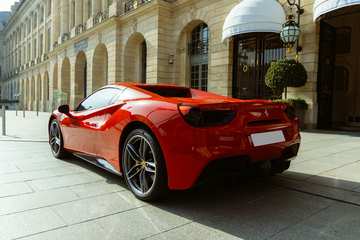 Specialized cooling: Managing heat generated by extreme engine output is vital, often requiring carefully integrated air intakes and exhaust systems that minimize drag.
Chassis and Materials: The Lightweight Foundation
To harness immense power and withstand extreme forces, a robust yet lightweight chassis is indispensable. The extensive use of exotic automotive materials such as carbon fiber monocoques, titanium, and advanced aluminum alloys is standard. This not only reduces overall weight, improving acceleration and handling, but also provides the necessary structural integrity.
Tires and Brakes: The Unsung Heroes of Speed
Imagine tires designed to withstand forces at over 300 mph. This is a reality for high-performance tires for hypercars. They are specifically engineered compounds capable of maintaining structural integrity and grip under immense centrifugal forces and heat. Similarly, braking systems must be equally advanced. Multi-piston ceramic brake calipers paired with large carbon-ceramic rotors are essential to safely decelerate these mechanical beasts from their astronomical top speeds.
Powertrain Innovation: Combustion vs. Electric
For decades, the V8, V10, and W16 internal combustion engines have dominated the top of the speed charts. Their ability to produce immense power and their distinct auditory signature have defined the era of supercar performance. However, the automotive landscape is rapidly shifting.
Electric hypercars are no longer a niche curiosity; they are serious contenders. Their inherent advantage lies in instant torque delivery and the potential for extremely high power outputs. While battery technology and thermal management are significant challenges, brands like Rimac and Aspark have demonstrated that electric powertrains can indeed challenge and even surpass the fastest gasoline-powered vehicles. This electric revolution adds an entirely new dimension to the ultimate driving machines debate.
A Historical Perspective: Milestones in the Speed Wars
The journey to today’s incredible speeds is paved with iconic machines. The quest for the fastest production car has a rich history:
Early Milestones: Vehicles like the Mercedes-Benz 300 SL, which broke the 250 km/h barrier in the 1950s, and the Ferrari 288 GTO, exceeding 300 km/h in the 1980s, were monumental achievements for their time.
The McLaren F1 Era: Gordon Murray’s McLaren F1, a masterpiece of lightweight engineering and a naturally aspirated V12, set a benchmark in 1998 at 391 km/h, holding the record for years and solidifying its status as a legendary supercar performance benchmark.
Bugatti’s Revolution: The Bugatti Veyron’s arrival in 2005 was a watershed moment. Its W16 quad-turbocharged engine and a top speed exceeding 400 km/h (407 km/h officially) redefined the hypercar. This ushered in an era where the 400 km/h club became a tangible aspiration.
The Intensifying Rivalry: The Veyron paved the way for fierce competition. Koenigsegg, with models like the CCR and Agera RS, and SSC North America, with the Ultimate Aero and the controversial Tuatara, repeatedly challenged Bugatti’s dominance, each pushing the boundaries further. The Koenigsegg Agera RS’s official record of 447.2 km/h in 2017 was a significant achievement.
The New Guard: Breaking the 500 km/h Barrier and Beyond
The current generation of hypercars are not just about raw speed; they are sophisticated pieces of art and engineering. The pursuit of record-breaking hypercars has reached unprecedented levels.
Bugatti Chiron Super Sport 300+: While not officially recognized by Guinness World Records due to production-spec limitations, Bugatti’s Chiron Super Sport 300+ achieved a mind-boggling 490.48 km/h in 2019. This run, conducted on Volkswagen’s Ehra-Lessien test track, proved that the 500 km/h mark was within reach for production-derived vehicles. This remains a significant milestone in the quest for the fastest production car.
SSC Tuatara: SSC North America’s Tuatara has been a focal point of the speed wars. After a contentious initial attempt, the Tuatara officially secured a Guinness World Record with an average speed of 455.28 km/h (with a peak of 460 km/h) in 2021. This demonstrates the immense engineering prowess of American manufacturers in the hypercar segment.
Koenigsegg Jesko Absolut: Christian von Koenigsegg’s obsession with speed is legendary. The Jesko Absolut, designed specifically for ultimate top speed with an incredibly low drag coefficient, is theoretically capable of exceeding 500 km/h. While it has already set records for 0-400-0 km/h, its ultimate top-speed run is eagerly anticipated. This car embodies the cutting edge of aerodynamic automotive design.
Specialized cooling: Managing heat generated by extreme engine output is vital, often requiring carefully integrated air intakes and exhaust systems that minimize drag.
Chassis and Materials: The Lightweight Foundation
To harness immense power and withstand extreme forces, a robust yet lightweight chassis is indispensable. The extensive use of exotic automotive materials such as carbon fiber monocoques, titanium, and advanced aluminum alloys is standard. This not only reduces overall weight, improving acceleration and handling, but also provides the necessary structural integrity.
Tires and Brakes: The Unsung Heroes of Speed
Imagine tires designed to withstand forces at over 300 mph. This is a reality for high-performance tires for hypercars. They are specifically engineered compounds capable of maintaining structural integrity and grip under immense centrifugal forces and heat. Similarly, braking systems must be equally advanced. Multi-piston ceramic brake calipers paired with large carbon-ceramic rotors are essential to safely decelerate these mechanical beasts from their astronomical top speeds.
Powertrain Innovation: Combustion vs. Electric
For decades, the V8, V10, and W16 internal combustion engines have dominated the top of the speed charts. Their ability to produce immense power and their distinct auditory signature have defined the era of supercar performance. However, the automotive landscape is rapidly shifting.
Electric hypercars are no longer a niche curiosity; they are serious contenders. Their inherent advantage lies in instant torque delivery and the potential for extremely high power outputs. While battery technology and thermal management are significant challenges, brands like Rimac and Aspark have demonstrated that electric powertrains can indeed challenge and even surpass the fastest gasoline-powered vehicles. This electric revolution adds an entirely new dimension to the ultimate driving machines debate.
A Historical Perspective: Milestones in the Speed Wars
The journey to today’s incredible speeds is paved with iconic machines. The quest for the fastest production car has a rich history:
Early Milestones: Vehicles like the Mercedes-Benz 300 SL, which broke the 250 km/h barrier in the 1950s, and the Ferrari 288 GTO, exceeding 300 km/h in the 1980s, were monumental achievements for their time.
The McLaren F1 Era: Gordon Murray’s McLaren F1, a masterpiece of lightweight engineering and a naturally aspirated V12, set a benchmark in 1998 at 391 km/h, holding the record for years and solidifying its status as a legendary supercar performance benchmark.
Bugatti’s Revolution: The Bugatti Veyron’s arrival in 2005 was a watershed moment. Its W16 quad-turbocharged engine and a top speed exceeding 400 km/h (407 km/h officially) redefined the hypercar. This ushered in an era where the 400 km/h club became a tangible aspiration.
The Intensifying Rivalry: The Veyron paved the way for fierce competition. Koenigsegg, with models like the CCR and Agera RS, and SSC North America, with the Ultimate Aero and the controversial Tuatara, repeatedly challenged Bugatti’s dominance, each pushing the boundaries further. The Koenigsegg Agera RS’s official record of 447.2 km/h in 2017 was a significant achievement.
The New Guard: Breaking the 500 km/h Barrier and Beyond
The current generation of hypercars are not just about raw speed; they are sophisticated pieces of art and engineering. The pursuit of record-breaking hypercars has reached unprecedented levels.
Bugatti Chiron Super Sport 300+: While not officially recognized by Guinness World Records due to production-spec limitations, Bugatti’s Chiron Super Sport 300+ achieved a mind-boggling 490.48 km/h in 2019. This run, conducted on Volkswagen’s Ehra-Lessien test track, proved that the 500 km/h mark was within reach for production-derived vehicles. This remains a significant milestone in the quest for the fastest production car.
SSC Tuatara: SSC North America’s Tuatara has been a focal point of the speed wars. After a contentious initial attempt, the Tuatara officially secured a Guinness World Record with an average speed of 455.28 km/h (with a peak of 460 km/h) in 2021. This demonstrates the immense engineering prowess of American manufacturers in the hypercar segment.
Koenigsegg Jesko Absolut: Christian von Koenigsegg’s obsession with speed is legendary. The Jesko Absolut, designed specifically for ultimate top speed with an incredibly low drag coefficient, is theoretically capable of exceeding 500 km/h. While it has already set records for 0-400-0 km/h, its ultimate top-speed run is eagerly anticipated. This car embodies the cutting edge of aerodynamic automotive design.
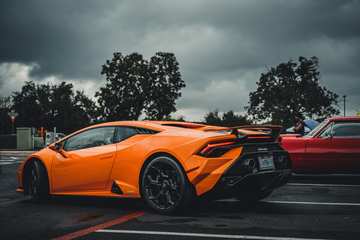 Hennessey Venom F5: Hennessey Performance Engineering, known for its audacious engineering, aims to break the 500 km/h barrier with its Venom F5. With a reported target speed of over 311 mph (500 km/h), this American hypercar is a serious contender in the ultimate speed challenge.
The Electric Uprising: A New Era of Speed
The narrative of the world’s fastest cars is no longer solely dominated by internal combustion. Electric powertrains are making a significant impact:
Rimac Nevera: Mate Rimac’s vision for electric hypercars has materialized in the stunning Nevera. This Croatian marvel has achieved remarkable speeds, officially becoming one of the fastest electric vehicles on record, reaching 412 km/h. Its ability to achieve sub-9-second quarter miles at incredible speeds showcases the raw potential of electric performance vehicles. While customer cars are limited, Rimac has demonstrated its true capabilities.
Aspark Owl SP600: From Japan comes the Aspark Owl, a supremely lightweight electric hypercar that has also claimed electric speed records, reaching an astonishing 438.7 km/h. This demonstrates the global nature of cutting-edge automotive technology.
Yangwang U9 Xtreme: The latest entrant to redefine the electric speed landscape is BYD’s Yangwang U9 Xtreme. This Chinese electric hypercar has achieved a sensational 496.22 km/h on the ATP test track. With over 3,000 hp in its limited edition form, it represents a significant leap forward for Chinese automotive innovation and has potentially surpassed even the fastest gasoline-powered production cars in terms of raw velocity. This electrifying performance places it firmly at the forefront of electric supercar development.
Navigating the Nuances: Record-Keeping and Real-World Performance
It’s crucial to acknowledge that the title of “world’s fastest car” can be debated. Guinness World Records requires specific criteria, including averaging speeds from two runs in opposite directions on a closed course to account for wind. Unofficial runs, while impressive, don’t carry the same weight. Furthermore, production car limitations, such as speed limiters for safety and tire longevity, mean that the absolute theoretical top speed of a hypercar might differ from what customers can legally and safely achieve on public roads. This nuance is vital when discussing automotive speed records.
The pursuit of these speeds often takes place in specialized locations, such as the Volkswagen Ehra-Lessien test track or the Automotive Testing Papenburg (ATP) facility in Germany, places synonymous with high-speed automotive testing. Enthusiasts seeking to experience the thrill of extreme speed might explore options for track days at dedicated circuits like those found in the greater Los Angeles automotive scene or other specialized venues, though such speeds are typically reserved for professional drivers and purpose-built vehicles.
The Future of Velocity: What Lies Ahead?
As we stand on the cusp of 2025 and beyond, the trajectory for the world’s fastest cars is clear: faster, more efficient, and increasingly electrified. The focus will continue to be on refining aerodynamic packages, developing even more potent powertrains, and exploring the untapped potential of electric propulsion. We can expect:
Continued electric dominance: As battery technology advances, electric hypercars will likely become the norm at the very top of the speed charts.
Hybrid synergy: Combinations of combustion engines and electric motors will continue to offer exceptional performance, bridging the gap between traditional and electric power.
New contenders: Expect established marques and emerging brands alike to vie for the ultimate speed crown, pushing the boundaries of what we thought possible. The development of next-generation hypercars is an ongoing, thrilling process.
Focus on sustainable speed: While raw velocity is the headline, there’s a growing emphasis on developing these high-performance machines with greater fuel efficiency and reduced environmental impact, exploring options like sustainable automotive fuels.
The race for the fastest car in the world is more than just a competition; it’s a showcase of human ingenuity and a glimpse into the future of automotive engineering. It inspires innovation, drives technological advancement, and fuels the passion of car enthusiasts everywhere. The sheer spectacle of these machines pushing the limits of physics is a testament to the enduring allure of speed.
Hennessey Venom F5: Hennessey Performance Engineering, known for its audacious engineering, aims to break the 500 km/h barrier with its Venom F5. With a reported target speed of over 311 mph (500 km/h), this American hypercar is a serious contender in the ultimate speed challenge.
The Electric Uprising: A New Era of Speed
The narrative of the world’s fastest cars is no longer solely dominated by internal combustion. Electric powertrains are making a significant impact:
Rimac Nevera: Mate Rimac’s vision for electric hypercars has materialized in the stunning Nevera. This Croatian marvel has achieved remarkable speeds, officially becoming one of the fastest electric vehicles on record, reaching 412 km/h. Its ability to achieve sub-9-second quarter miles at incredible speeds showcases the raw potential of electric performance vehicles. While customer cars are limited, Rimac has demonstrated its true capabilities.
Aspark Owl SP600: From Japan comes the Aspark Owl, a supremely lightweight electric hypercar that has also claimed electric speed records, reaching an astonishing 438.7 km/h. This demonstrates the global nature of cutting-edge automotive technology.
Yangwang U9 Xtreme: The latest entrant to redefine the electric speed landscape is BYD’s Yangwang U9 Xtreme. This Chinese electric hypercar has achieved a sensational 496.22 km/h on the ATP test track. With over 3,000 hp in its limited edition form, it represents a significant leap forward for Chinese automotive innovation and has potentially surpassed even the fastest gasoline-powered production cars in terms of raw velocity. This electrifying performance places it firmly at the forefront of electric supercar development.
Navigating the Nuances: Record-Keeping and Real-World Performance
It’s crucial to acknowledge that the title of “world’s fastest car” can be debated. Guinness World Records requires specific criteria, including averaging speeds from two runs in opposite directions on a closed course to account for wind. Unofficial runs, while impressive, don’t carry the same weight. Furthermore, production car limitations, such as speed limiters for safety and tire longevity, mean that the absolute theoretical top speed of a hypercar might differ from what customers can legally and safely achieve on public roads. This nuance is vital when discussing automotive speed records.
The pursuit of these speeds often takes place in specialized locations, such as the Volkswagen Ehra-Lessien test track or the Automotive Testing Papenburg (ATP) facility in Germany, places synonymous with high-speed automotive testing. Enthusiasts seeking to experience the thrill of extreme speed might explore options for track days at dedicated circuits like those found in the greater Los Angeles automotive scene or other specialized venues, though such speeds are typically reserved for professional drivers and purpose-built vehicles.
The Future of Velocity: What Lies Ahead?
As we stand on the cusp of 2025 and beyond, the trajectory for the world’s fastest cars is clear: faster, more efficient, and increasingly electrified. The focus will continue to be on refining aerodynamic packages, developing even more potent powertrains, and exploring the untapped potential of electric propulsion. We can expect:
Continued electric dominance: As battery technology advances, electric hypercars will likely become the norm at the very top of the speed charts.
Hybrid synergy: Combinations of combustion engines and electric motors will continue to offer exceptional performance, bridging the gap between traditional and electric power.
New contenders: Expect established marques and emerging brands alike to vie for the ultimate speed crown, pushing the boundaries of what we thought possible. The development of next-generation hypercars is an ongoing, thrilling process.
Focus on sustainable speed: While raw velocity is the headline, there’s a growing emphasis on developing these high-performance machines with greater fuel efficiency and reduced environmental impact, exploring options like sustainable automotive fuels.
The race for the fastest car in the world is more than just a competition; it’s a showcase of human ingenuity and a glimpse into the future of automotive engineering. It inspires innovation, drives technological advancement, and fuels the passion of car enthusiasts everywhere. The sheer spectacle of these machines pushing the limits of physics is a testament to the enduring allure of speed.
 If you’re captivated by the pursuit of ultimate automotive performance and the engineering marvels that define the hypercar market, understanding these machines and their relentless drive for speed is key. Explore the latest releases, follow the record attempts, and appreciate the dedication and innovation that bring these ultimate driving machines to life. The journey to the absolute pinnacle of automotive speed is a continuous evolution, and the next chapter promises to be even more exhilarating.